Anchor Points That Define Outdoor Spaces
Boulders & Natural Stone Features in Muncy for properties where topography requires retaining solutions or visual focal points
Sloped lots and tiered landscapes need structural elements that hold soil in place and create usable flat areas without the cost and footprint of engineered retaining walls. Boulders and natural stone features serve as both functional anchors and design statements, providing mass and texture that soften hardscaping while stabilizing grades. StoneWorks Landscape & Outdoor Supply sources boulders in sizes ranging from accent pieces to multi-ton structural stones that can brace slopes or mark property transitions.
Natural stone works for retaining applications because properly placed boulders transfer soil pressure downward into stable ground rather than relying on mortar or mechanical fasteners that can fail over time. You'll see them used to terrace hillsides, frame planting beds, or create elevation changes in otherwise flat yards. The material weathers naturally, developing moss and lichen growth that integrates the stone into the surrounding landscape rather than standing out as an obvious installation.
Schedule a site visit to assess slope conditions and discuss boulder sizing and placement based on soil stability and aesthetic goals.
How Boulders Change a Property's Flow
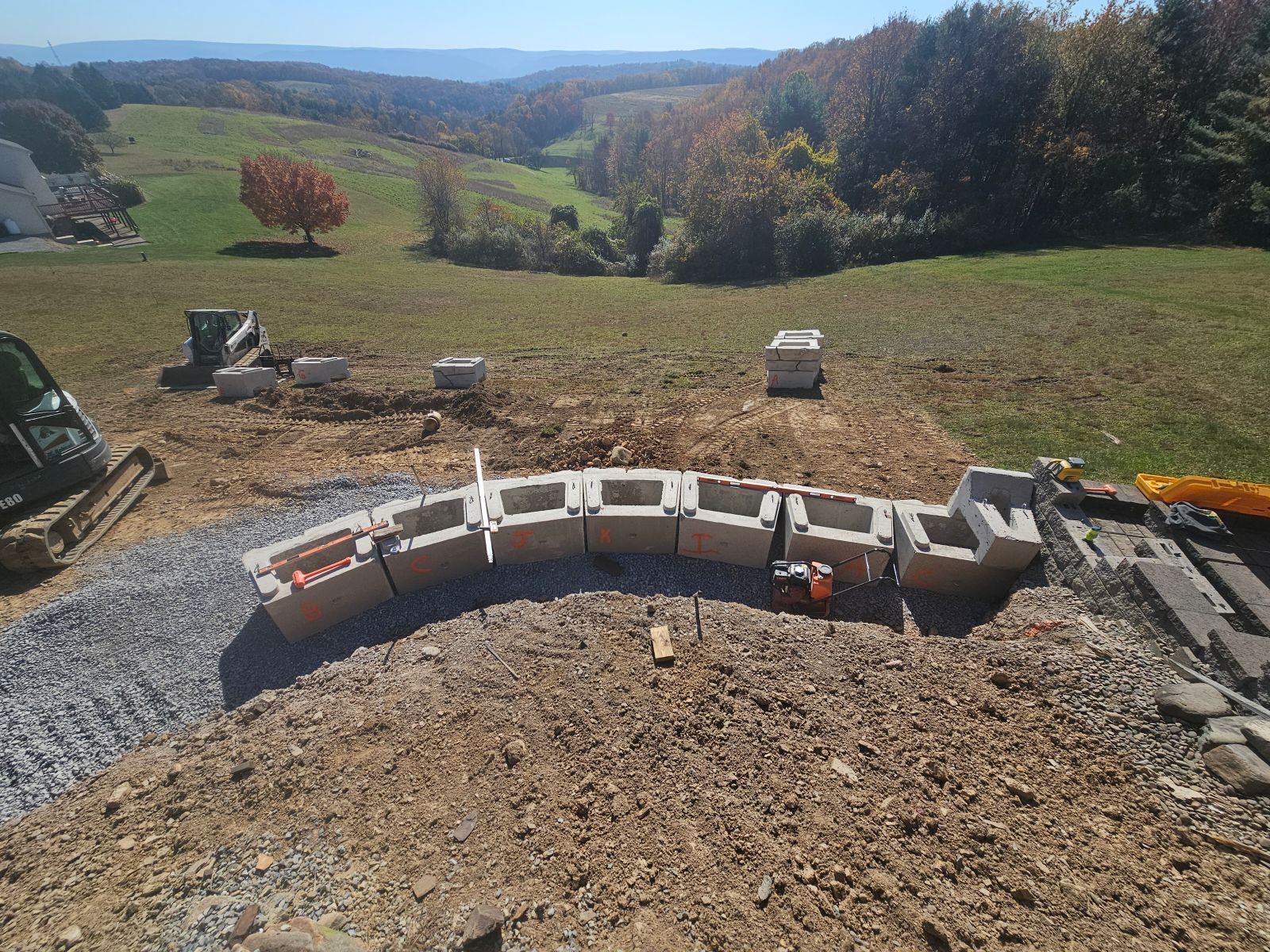
Once boulders are positioned, they become permanent reference points that organize the rest of the landscape. Pathways naturally curve around them, planting beds gain clear boundaries, and slopes stop eroding at the base where stone meets soil. The weight and friction of large stones hold them in place without footings or concrete, which means installation involves excavation and leveling rather than structural engineering.
Professional placement includes burying a portion of each boulder so it appears to emerge from the ground rather than sitting on top of it. This improves stability and looks more naturalistic, as though the stone has always been part of the site. You'll notice the texture and color variation in natural stone, which ranges from gray and tan fieldstone to darker metamorphic rock with visible striations, depending on what's quarried locally.
Boulders suit rustic and naturalistic designs better than formal or symmetrical layouts, though they can anchor modern landscapes when paired with clean-lined pavers or geometric planting beds. Smaller accent boulders work in flower beds or as markers at driveway entrances, while larger structural stones handle the loads required for terrace walls or water feature surrounds. Delivery and installation involve equipment capable of lifting and positioning stones that often weigh several hundred pounds or more.
What Property Owners Usually Ask
Homeowners considering boulders for retaining or design purposes want to know how the stone performs structurally and what affects long-term appearance.
What size boulder do I need for a retaining application?
Boulder size depends on the height of the slope and soil type, but stones used for structural bracing typically weigh at least 500 pounds to resist soil pressure. Taller slopes or unstable soils may require multi-ton stones positioned in staggered rows.
How are boulders installed without damaging the surrounding landscape?
Professional placement uses excavators or skid steers to position stones with minimal disturbance to adjacent turf or planting beds. Each boulder is partially buried and leveled so it sits firmly without rocking, and surrounding soil is backfilled and compacted.
Do boulders shift or settle over time in Muncy?
Properly placed boulders remain stable through freeze-thaw cycles and heavy rain because their mass and buried depth prevent movement. Settlement can occur if the base soil is very soft, which is why site evaluation includes checking soil compaction before installation.
What types of stone are available locally?
Options vary by quarry, but common choices include fieldstone with rounded edges, angular metamorphic rock, and sedimentary stone with layered textures. Natural finishes weather to blend with surrounding vegetation, while split-face stone shows fresh, clean surfaces that stand out visually.
Can boulders be combined with other hardscaping materials?
Boulders pair well with pavers for transitions between flat surfaces and naturalistic areas, and they work alongside decorative stone or mulch in planting beds. Mixing materials creates contrast and defines different zones within the landscape.
StoneWorks Landscape & Outdoor Supply handles boulder sourcing, delivery, and professional placement for properties across Muncy where slope management or landscape focal points are needed. Contact us to review stone options and site conditions before your next project begins.