
Outdoor Spaces That Extend Usable Months
Decking & Outdoor Living Structures in Muncy for properties adding functional square footage outside the home's footprint
Weather-resistant decking extends the seasons when outdoor spaces remain comfortable, handling spring humidity and fall temperature swings that would damage untreated wood or cause warping. You choose between traditional wood that weathers to a silver-gray patina or composite materials that hold their color and resist moisture absorption. StoneWorks Landscape & Outdoor Supply builds custom decks in Muncy for homeowners adding entertaining areas, replacing deteriorated structures, or increasing property value before a sale. Designs account for how the deck connects to existing doorways, steps down to grade-level yard space, and orients toward sun or shade depending on intended use.
Decking works as outdoor living space because it creates a flat, stable surface where furniture stays level and foot traffic doesn't compact soil or wear down turf. Elevated designs allow air circulation beneath the deck, which speeds drying after rain and reduces moisture-related rot. Integrated seating and railing options build functionality into the structure itself, reducing the need for freestanding furniture that shifts or degrades outdoors.
Schedule a design consultation to discuss layout options, material preferences, and how the deck will connect to your home's existing access points.
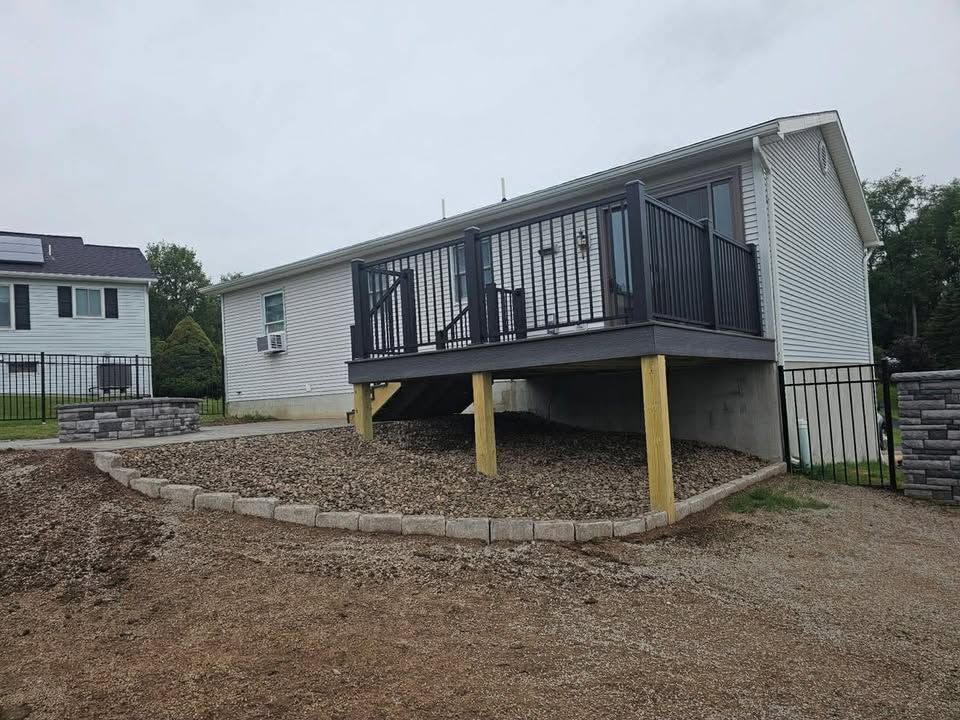
The Difference Between Wood and Composite Decking
Wood decking requires periodic staining or sealing to maintain appearance and prevent moisture penetration, but it offers natural grain patterns and a lower upfront cost. Composite decking costs more initially but eliminates the need for refinishing, resists fading from UV exposure, and doesn't splinter or crack as it ages. Both materials handle Pennsylvania freeze-thaw cycles when properly installed with adequate drainage and ventilation beneath the deck surface.
After construction, you'll notice the deck provides a clean transition from indoor to outdoor spaces, with railings that meet code requirements for height and spacing while complementing the home's architectural style. Built-in seating or planter boxes add function without cluttering the deck surface, and lighting integrated into posts or railings extends usability into evening hours. The structure increases usable square footage for gatherings without the cost or permitting complexity of adding interior rooms.
Custom designs accommodate irregular lot shapes, existing trees, or slopes that would otherwise limit where outdoor furniture can be placed. Stairs and transitions to ground-level pathways or patios are built as part of the structure, creating flow between different outdoor zones. Material selection affects not only maintenance schedules but also how the deck feels underfoot in summer heat, with composite staying cooler than some wood species and offering slip resistance even when wet.
Questions Before Starting Your Project
Homeowners planning deck construction want to understand how material choices affect long-term performance and what influences overall project cost.
What determines whether wood or composite is the better choice?
Wood suits projects where budget is limited and you're willing to maintain the surface every few years. Composite works better for homeowners who want minimal upkeep and consistent color over decades, particularly in high-traffic areas where splintering or wear becomes an issue with wood.
How does decking hold up in Muncy winters?
Both wood and composite handle freeze-thaw cycles, but proper installation with adequate spacing between boards allows expansion and contraction without warping. Drainage beneath the deck prevents water from pooling and accelerating decay or mold growth.
What size deck makes sense for different uses?
Decks for dining typically need at least 12 by 12 feet to accommodate a table and chairs with room to move, while lounge areas can be smaller. Multi-level designs create separate zones for cooking, eating, and relaxing without requiring a single large footprint.
Can railings and built-in features be added later?
Railings are typically installed during initial construction to meet code, but benches, planters, and privacy screens can be added afterward. Planning for these features during design ensures structural support is in place where needed.
StoneWorks Landscape & Outdoor Supply designs and builds decking and outdoor living structures across Muncy, working with homeowners to match materials and layouts to how the space will actually be used. Reach out to discuss your project scope and review material samples before construction begins.