
Surfaces Built to Handle Freeze and Thaw
Pavers & Hardscaping Materials in Muncy for driveways, walkways, and patios exposed to seasonal temperature shifts
Concrete slabs crack when the ground beneath them freezes and expands, then settles unevenly as it thaws. Pavers avoid this problem because individual units move independently, distributing stress across joints filled with sand rather than through a continuous surface. StoneWorks Landscape & Outdoor Supply supplies pavers and hardscaping materials in Muncy for homeowners replacing failed concrete or building new outdoor surfaces that need to last through Pennsylvania winters. You select from styles ranging from traditional brick patterns to contemporary linear designs, in colors that complement existing siding or trim.
Paver systems work because the base beneath them, typically compacted gravel and sand, allows water to drain rather than pooling under the surface where it can freeze. Each unit locks into place through edge restraints and the friction of tight joints, but minor ground movement doesn't cause the catastrophic failure you see with monolithic concrete. Slip-resistant finishes reduce fall risk on walkways and pool decks, and damaged pavers can be individually replaced without demolishing the entire surface.
Arrange an on-site consultation to review layout options and calculate material quantities based on your driveway, patio, or walkway dimensions.
What Proper Installation Requires
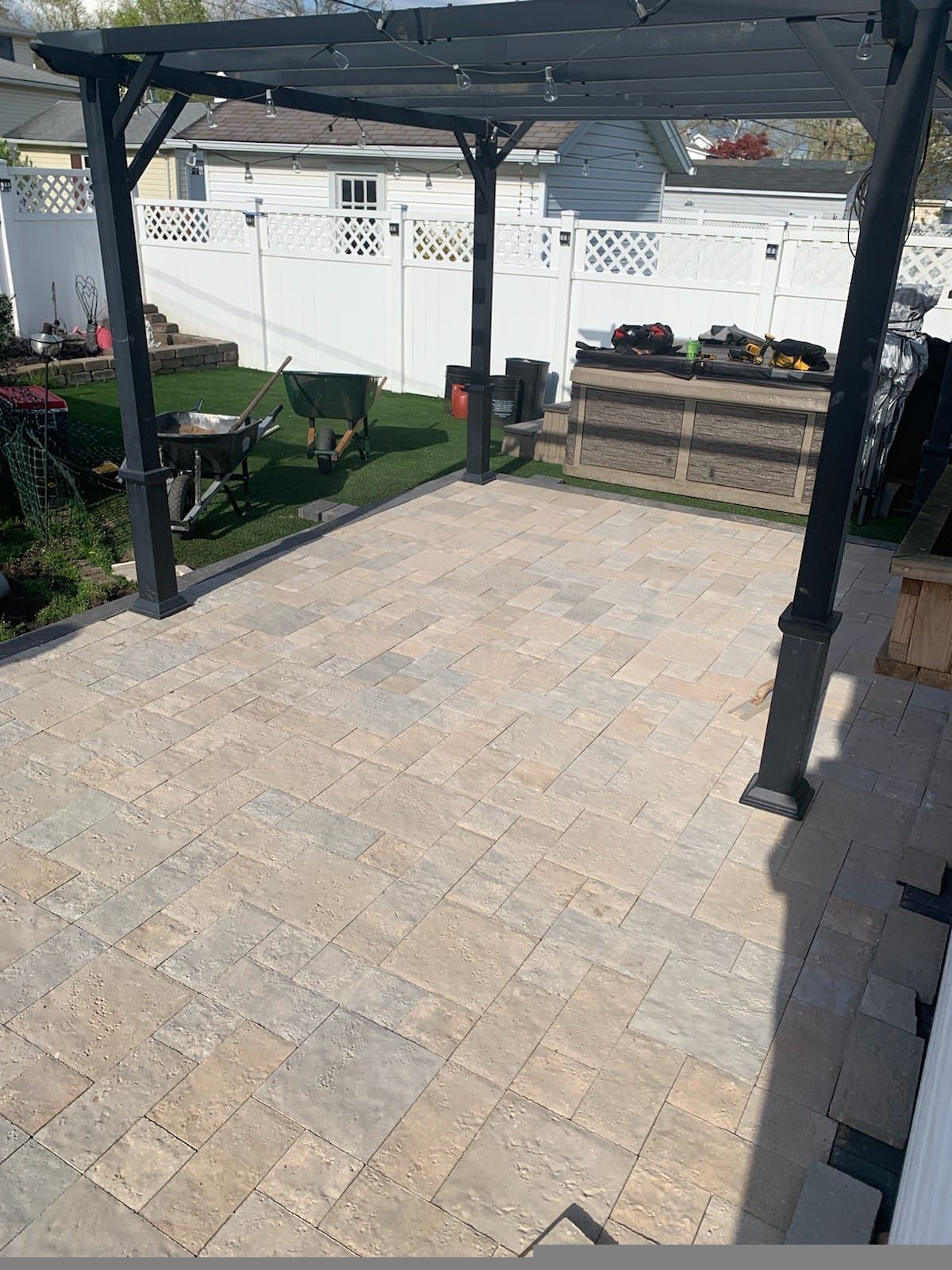
Paver installation begins with excavation to a depth that accommodates the base, sand layer, and paver thickness while keeping the finished surface at the correct grade for drainage. The base is compacted in lifts to prevent settling, and edge restraints are installed before pavers go down. This prep work determines whether the surface remains level over time or develops low spots where water collects.
After pavers are laid in the chosen pattern, joints are filled with polymeric sand that hardens when wetted, locking units together and preventing weed growth or insect colonization. The surface is compacted again to seat pavers firmly into the sand bed. You'll notice that properly installed pavers sit flush with one another, drain water toward designed slopes, and resist shifting even under vehicle traffic.
Custom layout options allow for curves, borders, and inset patterns that personalize the design beyond standard grid arrangements. Professional installation includes addressing transitions where pavers meet turf, existing concrete, or building foundations, so edges remain clean and stable. Repair is straightforward because individual pavers lift out if underground utilities need access or if a unit cracks, and replacements drop into place without affecting surrounding areas.
Common Questions About This Service
Property owners planning paver projects want to understand how the material performs under load and what maintenance involves over time.
What makes pavers more durable than poured concrete?
Pavers flex independently, so ground movement from freeze-thaw cycles doesn't cause cracking. The jointed system distributes stress across the entire surface, and individual units can be replaced if damaged without disturbing adjacent pavers.
How thick should the base be for a paver driveway?
Base depth depends on soil type and expected load, but six to eight inches of compacted gravel is common for driveways in Muncy where freeze-thaw cycles affect ground stability. Walkways and patios with lighter traffic may require only four to six inches.
Do pavers require sealing or ongoing treatment?
Sealing is optional and primarily affects color retention and stain resistance. Unsealed pavers weather naturally, developing a patina over time, while sealed surfaces maintain their original color longer and resist oil stains on driveways.
When is the best time to install pavers?
Installation works best when ground conditions are dry and temperatures are above freezing, typically late spring through mid-fall. Winter installations are possible but slower because frozen ground complicates excavation and compaction.
Can pavers be installed over existing concrete?
In some cases, pavers can be laid over stable concrete with proper surface prep and a leveling layer, but this raises the finished grade and may affect drainage or door clearances. Removing the old concrete and building a proper base usually provides better long-term results.
StoneWorks Landscape & Outdoor Supply provides pavers and hardscaping materials with professional installation services throughout Muncy. Request a detailed estimate to review design options and site preparation requirements for your patio, walkway, or driveway project.